

Quick answer
Tour operators in the Atacama Desert operate from San Pedro de Atacama and must hold regional tourism licenses issued by SERNATUR. Most excursions depart between 06:00 and 16:00, aligning with park entry windows and avoiding mid-day heat exposure. Individual national reserves and protected areas charge separate entrance fees per visitor, with no central desert admission cost. Operator selection hinges on vehicle condition, multilingual guide availability, and verifiable insurance policies covering high-altitude emergencies.
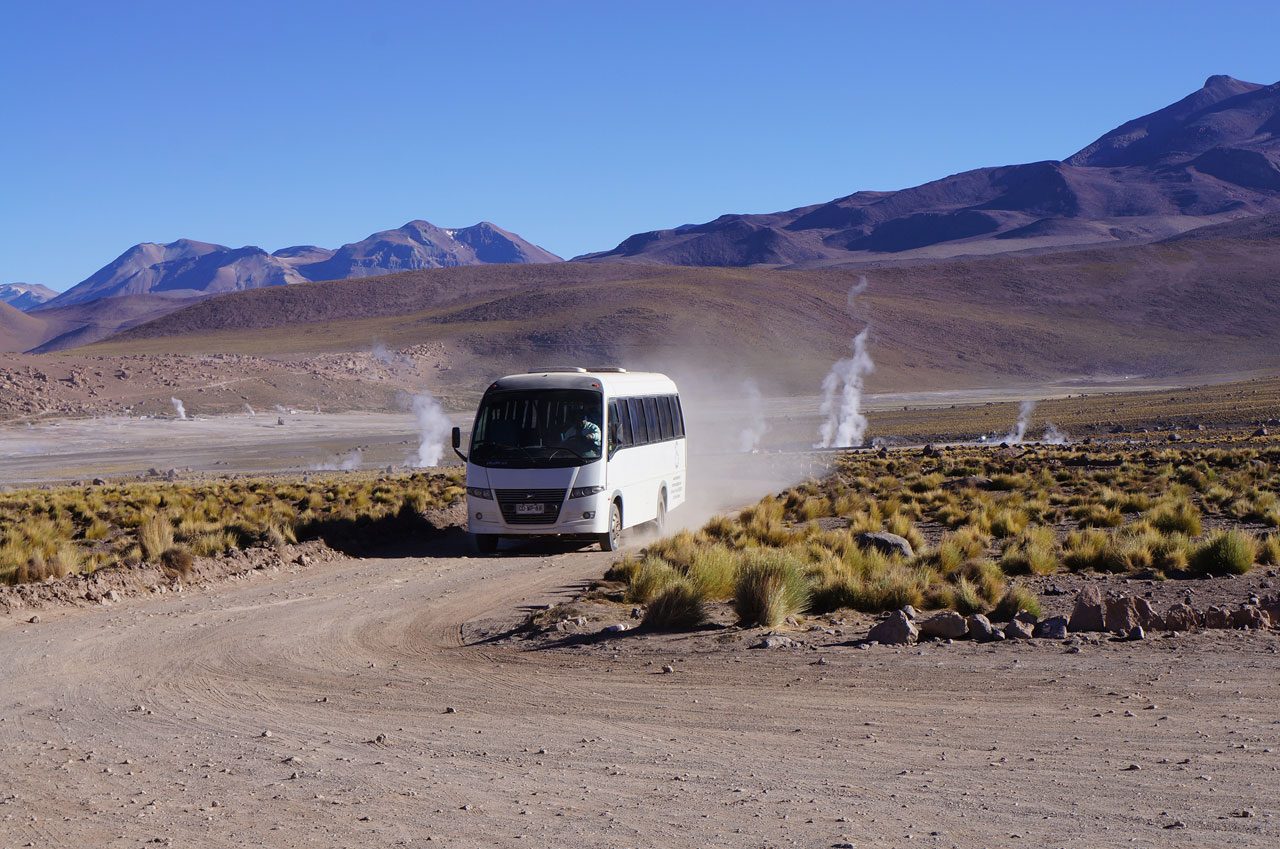
The Atacama Desert spans 105,000 square kilometers of hyper-arid terrain, making independent navigation impractical for most visitors. Licensed tour agencies provide the only regulated access to geothermal fields, salt flats, and flamingo reserves scattered across the Antofagasta Region. San Pedro de Atacama serves as the operational hub, where atacama desert tour operators maintain offices along Caracoles and Tocopilla streets. The concentration of agencies reflects both tourism demand and the logistical challenge of coordinating permits across multiple protected areas. Licensing requirements mandate vehicle inspections every six months, driver certification for high-altitude routes, and liability insurance covering altitudes above 4,000 meters. CONAF, Chile's forestry service, enforces vehicle quotas at popular sites like Valle de la Luna and Lagunas Altiplánicas, restricting entry after 16:00 to prevent sunset traffic congestion. Operators coordinate departure times to secure entry slots, a system that favors agencies with established permit relationships. Tour groups typically range from six to twelve participants, balancing vehicle capacity with the personalized experience most travelers expect. Guide credentials vary significantly. Certified naturalist guides complete training in high-altitude first aid, geology, and indigenous Atacameño history, while unlicensed guides may lack emergency protocols for altitude sickness. The elevation differential between San Pedro de Atacama at 2,400 meters and destinations like Tatio Geysers at 4,320 meters creates physiological risk that trained guides recognize and manage. Vehicle condition directly impacts safety on unpaved roads leading to thermal sites and lagoons, where breakdowns leave groups exposed to temperature extremes. Booking windows tighten during Chilean winter (June through August) when domestic tourism peaks and international travelers seek clearer skies for stargazing excursions. Agencies operating Tatio Geyser tours depart San Pedro between 04:00 and 05:00 to reach the site by sunrise, when steam plumes achieve maximum visibility. Afternoon excursions to salt flats and flamingo habitats align with optimal wildlife activity and lighting conditions. Most guided tours in the region include transportation, park entry coordination, and meals, simplifying logistics for visitors unfamiliar with desert infrastructure.
“The elevation differential between San Pedro de Atacama at 2,400 meters and destinations like Tatio Geysers at 4,320 meters creates physiological risk that trained guides recognize and manage.”
How to Vet and Select Atacama Desert Tour Operators
Vetting tour operators in San Pedro de Atacama requires verifying safety credentials and matching itineraries to your physical capabilities and schedule. The entire research and booking process typically takes 2–3 days to complete thoroughly.
Check operator insurance documentation
Request proof of liability insurance and emergency evacuation coverage before booking. Many operators display certifications in their offices but fail to include them on websites, so ask directly via email or phone.
Verify guide certifications and ratios
Confirm that guides hold Chilean tourism certifications (SERNATUR registration) and ask about guide-to-guest ratios for your specific tour. Ratios above 1:12 often signal rushed explanations and limited individual attention at geological sites.
Cross-reference itinerary with park schedules
Compare the operator's proposed schedule against individual park entry cut-offs, which vary by site and season. Operators sometimes list attractions their timing cannot realistically accommodate, leaving you with missed locations.
Confirm vehicle age and maintenance records
Request the model year of assigned vehicles and ask when the last safety inspection occurred. Older 4x4s frequently break down on remote desert tracks, where rescue can take 4–6 hours.
Read cancellation and weather policies
Identify whether the operator refunds or reschedules tours canceled due to rare rain or high-altitude weather at geysers. Policies vary widely, and some operators retain full payment even when conditions make sites inaccessible.
Verify altitude acclimatization guidance
Ask whether the operator provides pre-tour acclimatization advice for high-altitude destinations like El Tatio Geysers (4,320 meters). Operators who skip this briefing often face mid-tour medical emergencies that abort the itinerary for all guests.
Insider Tips for Evaluating Atacama Desert Tour Operators
Selecting a reliable operator requires looking beyond marketing materials to assess operational safety and service quality.
Verify guide-to-guest ratios
Confirm the operator maintains a maximum ratio of one guide for every ten guests to ensure safety and group mobility. Smaller groups allow for more personalized navigation of narrow paths and sensitive environments.
Prioritize mechanical maintenance history
Inquire about vehicle maintenance schedules and request photos of current transport equipment. High-quality operators provide reliable 4x4 vehicles equipped with emergency repair kits and satellite communication for remote desert routes.
Demand language proficiency
Explicitly request confirmation that your assigned guide is fluent in your preferred language rather than just conversational. Ask for testimonials or references specifically related to the technical, geological, or astronomical knowledge of their bilingual staff.
Check emergency protocols
Ask specifically about the operator's contingency plans for vehicle breakdowns or medical emergencies in remote areas. A professional operator will demonstrate clear procedures for communication with a central base in San Pedro de Atacama and access to backup transport.
Examine environmental certification
Prioritize operators that demonstrate strict adherence to 'Leave No Trace' principles and hold local community recognition. Qualified companies actively educate guests on minimizing impact to fragile salt flat ecosystems during visits.
Seasonal and Daily Timing When Using Atacama Desert Tour Operators
The period from April to June and September to November offers the most stable climate for desert excursions. These shoulder seasons provide clear skies and moderate temperatures, avoiding the extremes of the peak summer heat and winter cold.
April–June, September–November
ModerateMild days, cold nights (5°C–22°C)
Optimal balance of comfortable temperatures and clear visibility for astronomical tours.
December–March
HighHot days, rainy spells (10°C–25°C)
The Altiplanic winter brings potential cloud cover and occasional rain to high-altitude sites.
July–August
HighCold days, freezing nights (-2°C–18°C)
Peak season attracts more visitors, requiring earlier reservations for popular excursions.
Daily 06:00–16:00
Variable—
Adhere to this best arrival window to avoid mid-day heat and reach popular sites before vehicle entry cut-offs.
Verdict: For the most consistent conditions, plan visits for April or October, ensuring daily arrivals fall within the 06:00–16:00 window.
Common Mistakes to Avoid When Booking Atacama Desert Tour Operators
Many visitors book desert tours based solely on advertised price, only to discover unlicensed guides or operators without proper environmental permits. Understanding certification requirements and checking operator credentials prevents safety issues and protects Atacama's fragile ecosystems.
Booking the cheapest operator without verifying local guide certification
Check that your operator holds SERNATUR registration and employs guides certified by Chile's national tourism authority—unlicensed operators lack insurance coverage and may access restricted zones illegally.
Assuming all operators carry environmental permits for protected areas
Confirm your operator holds permits for entering Los Flamencos National Reserve and other protected sites—unauthorized entry results in denied access and wasted tour days.
Selecting tours based only on online reviews without checking safety equipment standards
Verify that operators provide proper altitude-sickness prevention measures, emergency oxygen, and satellite communication for high-altitude excursions above 4,000 meters.
Booking multi-day tours without confirming the operator's local emergency protocols
Ask operators to specify their evacuation procedures and nearest medical facility contacts—the Atacama's remoteness means delays can turn minor issues serious.
Choosing operators that promise access to culturally sensitive sites without community agreements
Ensure your operator has formal agreements with indigenous Lickanantay communities for visits to ancestral sites—unauthorized tours damage relationships and may be turned away.
Failing to verify group size limits before booking
Confirm maximum group numbers match park regulations—overcrowded vehicles face entry denial at sites like Valle de la Luna that enforce strict capacity limits.
Opening Hours and Availability for Atacama Desert Tour Operators
Support offices and visitor centers in San Pedro de Atacama operate on a consistent daily schedule to assist with desert tour inquiries.
| Monday | 06:00–18:00 | |
|---|---|---|
| Tuesday | 06:00–18:00 | |
| Wednesday | 06:00–18:00 | |
| Thursday | 06:00–18:00 | |
| Friday | 06:00–18:00 | |
| Saturday | 06:00–18:00 | |
| Sunday | 06:00–18:00 |
Check availability
Frequently asked questions about atacama desert tour operators
Everything you need to know about atacama desert tour operators